Showing posts with label science. Show all posts
Friday, 26 September 2014
Beautiful, Beautiful, Beautiful
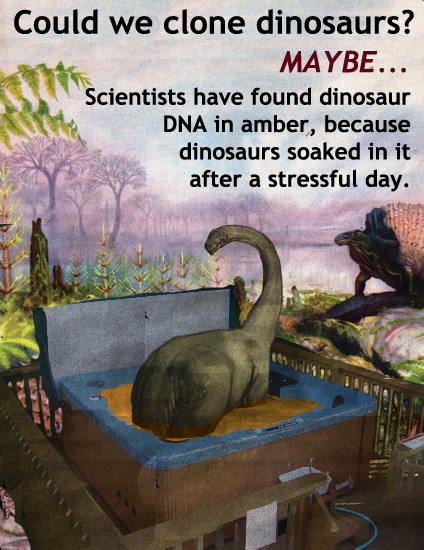
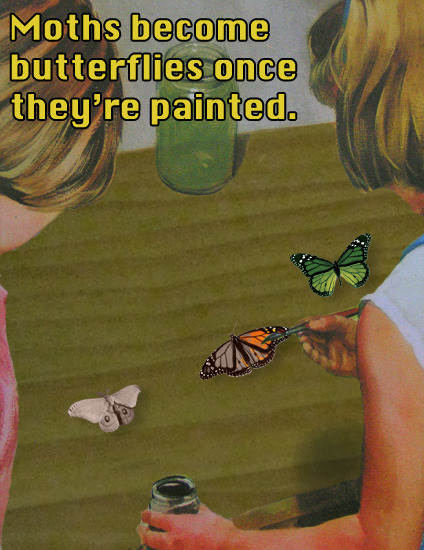
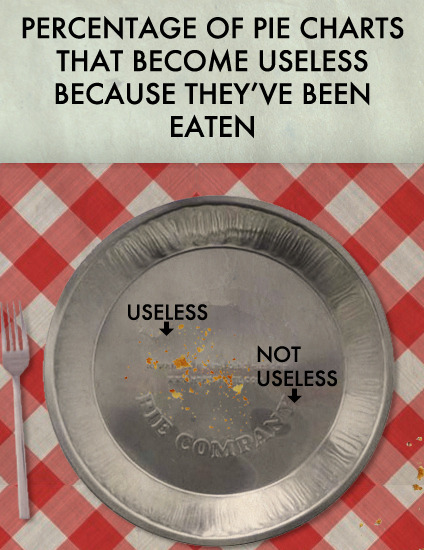
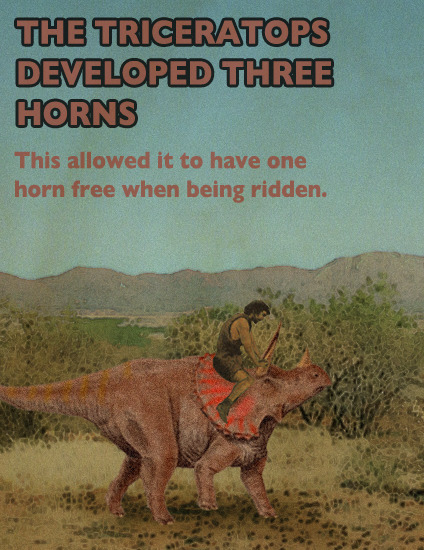
Need I add anything? A wonderful collision of art and science created by Seattle-based science artist Eleanor Lutz. Do visit her brilliant blog, Tabletop Whale, here.
Tuesday, 26 February 2013
The most amazing video you'll see today - Raining on the Sun
Does it rain on the Sun?
Yes, although what falls is not water but extremely hot plasma.
An example occurred in mid-July 2012 after an eruption on the Sun that produced both a Coronal Mass Ejection and a moderate solar flare. What was more unusual, however, was what happened next. Plasma in the nearby solar corona was imaged cooling and falling back, a phenomenon known as coronal rain. Because they are electrically charged, electrons, protons, and ions in the rain were gracefully channeled along existing magnetic loops near the Sun's surface, making the scene appear as a surreal three-dimensional sourceless waterfall. The resulting surprisingly-serene spectacle is shown in ultraviolet light and highlights matter glowing at a temperature of about 50,000 Kelvin (that's around 50,000 degrees C or about 90,000 degrees F). Each second in the time lapse video takes about 6 minutes in real time, so that the entire coronal rain sequence lasted about 10 hours.
Amazing, eh?
Yes, although what falls is not water but extremely hot plasma.
An example occurred in mid-July 2012 after an eruption on the Sun that produced both a Coronal Mass Ejection and a moderate solar flare. What was more unusual, however, was what happened next. Plasma in the nearby solar corona was imaged cooling and falling back, a phenomenon known as coronal rain. Because they are electrically charged, electrons, protons, and ions in the rain were gracefully channeled along existing magnetic loops near the Sun's surface, making the scene appear as a surreal three-dimensional sourceless waterfall. The resulting surprisingly-serene spectacle is shown in ultraviolet light and highlights matter glowing at a temperature of about 50,000 Kelvin (that's around 50,000 degrees C or about 90,000 degrees F). Each second in the time lapse video takes about 6 minutes in real time, so that the entire coronal rain sequence lasted about 10 hours.
Amazing, eh?
Thursday, 17 January 2013
Let me see you shake your tail feather
We've known for some time now that dinosaurs had feathers and that the theropod dinosaurs were the ancestors of modern birds. The proof is quite overwhelming - particularly the large number of feathered dinosaur fossils found in recent years in China. And then, last year, the first dino-feathers trapped in amber were discovered near Grassy Lake in Alberta - dating from the Late Cretaceous period. And they told a fascinating story.
"We're finding two ends of the evolutionary development that had been proposed for feathers trapped in the same amber deposit," said Ryan McKellar of the University of Alberta. The team's find confirms that individual filaments progressed to tufts of filaments from a single origin, called barbs. In later development, some of these barbs can coalesce into a central branch called a rachis. As the structure develops further, further branches of filments form from the rachis. "We've got feathers that look to be little filamentous hair-like feathers, we've got the same filaments bound together in clumps, and then we've got a series that are for all intents and purposes identical to modern feathers," says Mr McKellar. "We're catching some that look to be dinosaur feathers and another set that are pretty much dead ringers for modern birds."
We also now know that feathers appeared much earlier in dinosaur evolution than first thought. Fossils of Ornithomimus edmontonicus - which looked something like ostriches but were not previously known to have feathers - have recently been found to have hundreds of traces of filaments along the body and limbs. Moreover, as the team reported in Science, while one of the two adult skeletons showed evidence of possessing a pennibrachium = a forelimb bearing long feathers that form a winglike surface - the third specimen, a juvenile dinosaur about 1-year-old, lacked this structure, although it still had numerous feathers along its body. This marks the first time that wings and feathers have been identified in ornithomimosaurs. "Our specimens are currently the most primitive dinosaur to show winglike structures," says Dr Darla Zelenitsky, a geoscientist at the University of Calgary in Canada, "And because ornithomimosaurs were fairly large, weighing 150 kilograms or more, these earliest wings did not initially evolve for flight - they were obviously not flyers or gliders. Moreover, O. edmontonicus does not appear to have developed its full plumage until it reached the adult stage, which suggests that the wings and feathers served some sort of adult reproductive function such as courtship and brooding."
Meanwhile, another study of a 150 million year old dinosaur fossil has revealed it had multi-coloured feathers. The research, published in the journal Science, compared the structures which determine colour in living bird feathers with those in the fossil. "This would be a very striking animal if it was alive today," said Yale University's Professor Richard Prum, co-author of the report. It is believed the colours would have helped the dinosaur attract a mate. Anchiornis huxleyi is a four-winged dinosaur which lived in the late Jurassic Period in China. Researchers chose this particular fossil to work on because the feathers were so well preserved.
And why shouldn't dinosaurs have been colourful beasts? Just look at modern birds, reptiles and amphibians. But, more than that, look at how dynamic our modern animals are. Doesn't it seem likely that dinosaurs were just as active in their competition, mating and sexual attraction displays?
Well, another recent study suggests proof of exctly that. In an issue of the journal Acta Palaeontologica Polonica, three paleontologists posit that fossilised oviraptors possessed structural features that are characteristic of those found in modern birds with ornamental tails. For example, in the early oviraptor Similicaudipteryx, the last caudal vertebrae (the tip of the “tailbone”) are fused into a structure known as a “pygostyle," which was long thought to be a feature exclusive to modern birds. There is no evidence that Similicaudipteryx was a flying species, and the authors suggest that the bone and muscle structures that can be discerned from the fossil remains are consistent with those seen in birds with tail displays that don't aid in flying but do functional as flashy ornaments, such as peacocks, turkeys, and birds of paradise (note that these birds are not completely flightless, the tails just don't contribute to optimal flight). Some species do indeed favour form over function, and apparently the trend may have started way back in the Mesozoic.
These assertions are, of course, subject to scepticism due to the limitations of the fossil record. This is part of science - publishing new perspectives or conclusions and allowing the scientific community to contribute further analyses and information, ultimately either supporting or discarding the idea. What is unquestionable, however, is that this paper signifies just how far palaeontology has come in recent years. New finds and new technology have yielded broader and deeper information about the details of what dinosaurs actually looked like, how they moved, and how they might have interacted in their ancient world.
Sources:
SciLogs
ScienceMag
BBC News
BBC Science

"We're finding two ends of the evolutionary development that had been proposed for feathers trapped in the same amber deposit," said Ryan McKellar of the University of Alberta. The team's find confirms that individual filaments progressed to tufts of filaments from a single origin, called barbs. In later development, some of these barbs can coalesce into a central branch called a rachis. As the structure develops further, further branches of filments form from the rachis. "We've got feathers that look to be little filamentous hair-like feathers, we've got the same filaments bound together in clumps, and then we've got a series that are for all intents and purposes identical to modern feathers," says Mr McKellar. "We're catching some that look to be dinosaur feathers and another set that are pretty much dead ringers for modern birds."

We also now know that feathers appeared much earlier in dinosaur evolution than first thought. Fossils of Ornithomimus edmontonicus - which looked something like ostriches but were not previously known to have feathers - have recently been found to have hundreds of traces of filaments along the body and limbs. Moreover, as the team reported in Science, while one of the two adult skeletons showed evidence of possessing a pennibrachium = a forelimb bearing long feathers that form a winglike surface - the third specimen, a juvenile dinosaur about 1-year-old, lacked this structure, although it still had numerous feathers along its body. This marks the first time that wings and feathers have been identified in ornithomimosaurs. "Our specimens are currently the most primitive dinosaur to show winglike structures," says Dr Darla Zelenitsky, a geoscientist at the University of Calgary in Canada, "And because ornithomimosaurs were fairly large, weighing 150 kilograms or more, these earliest wings did not initially evolve for flight - they were obviously not flyers or gliders. Moreover, O. edmontonicus does not appear to have developed its full plumage until it reached the adult stage, which suggests that the wings and feathers served some sort of adult reproductive function such as courtship and brooding."
Meanwhile, another study of a 150 million year old dinosaur fossil has revealed it had multi-coloured feathers. The research, published in the journal Science, compared the structures which determine colour in living bird feathers with those in the fossil. "This would be a very striking animal if it was alive today," said Yale University's Professor Richard Prum, co-author of the report. It is believed the colours would have helped the dinosaur attract a mate. Anchiornis huxleyi is a four-winged dinosaur which lived in the late Jurassic Period in China. Researchers chose this particular fossil to work on because the feathers were so well preserved.

And why shouldn't dinosaurs have been colourful beasts? Just look at modern birds, reptiles and amphibians. But, more than that, look at how dynamic our modern animals are. Doesn't it seem likely that dinosaurs were just as active in their competition, mating and sexual attraction displays?
Well, another recent study suggests proof of exctly that. In an issue of the journal Acta Palaeontologica Polonica, three paleontologists posit that fossilised oviraptors possessed structural features that are characteristic of those found in modern birds with ornamental tails. For example, in the early oviraptor Similicaudipteryx, the last caudal vertebrae (the tip of the “tailbone”) are fused into a structure known as a “pygostyle," which was long thought to be a feature exclusive to modern birds. There is no evidence that Similicaudipteryx was a flying species, and the authors suggest that the bone and muscle structures that can be discerned from the fossil remains are consistent with those seen in birds with tail displays that don't aid in flying but do functional as flashy ornaments, such as peacocks, turkeys, and birds of paradise (note that these birds are not completely flightless, the tails just don't contribute to optimal flight). Some species do indeed favour form over function, and apparently the trend may have started way back in the Mesozoic.
These assertions are, of course, subject to scepticism due to the limitations of the fossil record. This is part of science - publishing new perspectives or conclusions and allowing the scientific community to contribute further analyses and information, ultimately either supporting or discarding the idea. What is unquestionable, however, is that this paper signifies just how far palaeontology has come in recent years. New finds and new technology have yielded broader and deeper information about the details of what dinosaurs actually looked like, how they moved, and how they might have interacted in their ancient world.
Sources:
SciLogs
ScienceMag
BBC News
BBC Science
Thursday, 22 November 2012
Planetary Flashmob
This is pretty cool: astronomer Alex Parker took all the planet candidates found by the Kepler telescope – nearly 2300 planets in all – and made an animation showing what they would look like if they all orbited one star.
Dr. Parker had to do some scaling to make this work. For example, the actual size of each planet is known relative to its parent star, which he then scaled to fit the star shown in the animation. He scaled the distance from the star in a similar way. He describes it all on the page for the video.
(Via the Bad Astronomy blog)
Dr. Parker had to do some scaling to make this work. For example, the actual size of each planet is known relative to its parent star, which he then scaled to fit the star shown in the animation. He scaled the distance from the star in a similar way. He describes it all on the page for the video.
(Via the Bad Astronomy blog)
Saturday, 10 November 2012
The Museum of Natural Curiosity
Note: These photographs are rubbish and were taken without flash on my crappy phone. They will be replaced with better shots as I get them in.
Last night we staged our first ever properly live Museum of Curiosity at London's Natural History Museum. I say 'properly' as the BBC radio show is recorded in front of an audience so, technically, that could be called 'live'. However, the radio shows don't usually get broadcast until a month or so after they're recorded so there's time to edit, tweak and to make them as good as we possibly can. This was a 'proper' live event in that what you saw was what you got; there was no such safety net. I think it's fair to say that the audience got something very special indeed.
We couldn't have hoped for a more sparkling panel of guests. The radio show normally has three guests and lasts for half an hour. This has always been something of a frustration as each guest is fascinating enough to devote half an hour (or more) to. In fact, we usually record two hours' worth of material and it's absolute hell for producers Rich Turner and Dan Schreiber to have to whittle it down to just 30 minutes and to lose so much good stuff that never makes it to air. For this live show, however, we had no such restrictions and so we were able to put on two hour long shows featuring two amazing panels.
Part One featured comedian, writer and host of It is Rocket Science, Helen Keen, the museum curator's curator Professor Richard Fortey and the legend that is Sir Terry Pratchett.
Part Two starred the Natural History Museum's 'Fly Girl' Dr Erica McAlister, the magnificent Dave Gorman and former First Sea Lord and 'ruler of the Queen's Navy' Admiral Lord Alan West, Baron West of Spithead - a man who has the best after-dinner stories of anyone I've ever met.
The show was steered brilliantly as ever by our boss, the legendary Mr John Lloyd, and by Dan Schreiber taking his first ever turn in the curator's hotseat previously filled by Jimmy Carr, Bill Bailey, Dave Gorman, Humphrey Ker, Sean Lock and Jon Richardson.
The show - staged in the cathedral-like main hall and punctuated occasionally by roars from Dippy the Diplodocus - ran from 7.30pm to 10pm during which the audience was treated to tales of monstrous 2 metre long millipedes, Superman's desk ornaments, the prehistory of Discworld, parasitic flies, the man who ate the heart of a king, Darwin's pet tortoise, Naval slang, cursed lockets, nefarious goings-on inside a whale, flying stick insect eggs, the Piltdown cricket bat and the seaweed expert who was mistakenly sent to Bletchley Park but who, by a twist of fate, ended up helping us win the war. Fascnating, hilarious stuff in the tradition of The Museum of Curiosity and our sister show QI. And the audience seemed to love it.
At 10pm 'The Museum of Natural Curiosity', as we'd called the show, had to come to an end but we still had a few more treats for those who could stay a little longer. Scientist, comedian and TV presenter Simon Watt - best known for fronting Inside Nature's Giants - did a very funny set about why we should stick up for ugly animals that don't get the same love as pandas and other 'charismatic mega-vertebrates'. And then comedian and TV presenter Eric Lampaert of How to Survive a Disaster Movie gave us 10 minutes of bizarre but brilliant stand-up on the subject of early Man. The evening was the rounded off with 15 minutes of Q and A with John and a selection of the guests: Helen, Erica, Dave and Alan.
A wonderful evening spent with tremendous people. Will we do another one? I sincerely hope so.
Last night we staged our first ever properly live Museum of Curiosity at London's Natural History Museum. I say 'properly' as the BBC radio show is recorded in front of an audience so, technically, that could be called 'live'. However, the radio shows don't usually get broadcast until a month or so after they're recorded so there's time to edit, tweak and to make them as good as we possibly can. This was a 'proper' live event in that what you saw was what you got; there was no such safety net. I think it's fair to say that the audience got something very special indeed.
We couldn't have hoped for a more sparkling panel of guests. The radio show normally has three guests and lasts for half an hour. This has always been something of a frustration as each guest is fascinating enough to devote half an hour (or more) to. In fact, we usually record two hours' worth of material and it's absolute hell for producers Rich Turner and Dan Schreiber to have to whittle it down to just 30 minutes and to lose so much good stuff that never makes it to air. For this live show, however, we had no such restrictions and so we were able to put on two hour long shows featuring two amazing panels.
Part One featured comedian, writer and host of It is Rocket Science, Helen Keen, the museum curator's curator Professor Richard Fortey and the legend that is Sir Terry Pratchett.
Part Two starred the Natural History Museum's 'Fly Girl' Dr Erica McAlister, the magnificent Dave Gorman and former First Sea Lord and 'ruler of the Queen's Navy' Admiral Lord Alan West, Baron West of Spithead - a man who has the best after-dinner stories of anyone I've ever met.
The show was steered brilliantly as ever by our boss, the legendary Mr John Lloyd, and by Dan Schreiber taking his first ever turn in the curator's hotseat previously filled by Jimmy Carr, Bill Bailey, Dave Gorman, Humphrey Ker, Sean Lock and Jon Richardson.
The show - staged in the cathedral-like main hall and punctuated occasionally by roars from Dippy the Diplodocus - ran from 7.30pm to 10pm during which the audience was treated to tales of monstrous 2 metre long millipedes, Superman's desk ornaments, the prehistory of Discworld, parasitic flies, the man who ate the heart of a king, Darwin's pet tortoise, Naval slang, cursed lockets, nefarious goings-on inside a whale, flying stick insect eggs, the Piltdown cricket bat and the seaweed expert who was mistakenly sent to Bletchley Park but who, by a twist of fate, ended up helping us win the war. Fascnating, hilarious stuff in the tradition of The Museum of Curiosity and our sister show QI. And the audience seemed to love it.
At 10pm 'The Museum of Natural Curiosity', as we'd called the show, had to come to an end but we still had a few more treats for those who could stay a little longer. Scientist, comedian and TV presenter Simon Watt - best known for fronting Inside Nature's Giants - did a very funny set about why we should stick up for ugly animals that don't get the same love as pandas and other 'charismatic mega-vertebrates'. And then comedian and TV presenter Eric Lampaert of How to Survive a Disaster Movie gave us 10 minutes of bizarre but brilliant stand-up on the subject of early Man. The evening was the rounded off with 15 minutes of Q and A with John and a selection of the guests: Helen, Erica, Dave and Alan.
A wonderful evening spent with tremendous people. Will we do another one? I sincerely hope so.
Saturday, 13 October 2012
An open letter to Jasmin H
I'm sure, by now, that you've seen the letter below, penned by Jasmin H, a home-schooled 14-year-old from Scargill in New Zealand, and published in the October 3rd edition of The Northern Outlook:
I decided that, rather than ridicule her as so many websites are doing - it's probably not her fault, people, and she's 14 - I'd write her letter:
Hi Jasmin
I read your letter in the newspaper and decided that I would write a letter to you. I should start by saying that I'm not homosexual and I have no agenda in writing this letter. I'm a married man, an ex-cop in his 50's, with three grown up kids in their 20s. Nor am I anti-religion (though I have no faith myself) and would never belittle your beliefs if you have any. I won't be impolite or, in any way, rude or bullying. You're obviously a smart young lady and feel strongly enough and well-informed enough to write letters to newspapers. All I'm asking you to do is read this letter and look at a few sources of information that maybe you haven't seen before. I hope that's okay.
I was a little bit confused by your letter. You say in your final paragraph that you don't believe in evolution. I wonder why that is, considering the weight of evidence for it. If, as I suspect, you are a person of faith, there is no reason why your faith and evolution have to be mutually incompatible. After all, the Catholic church and the Church of England and many other branches of Christianity accept evolution as fact. They simply argue that God created the process. I can't prove that they're wrong! You obviously know something about the subject because, throughout the letter, you talk about evolution as if it does exist, using phrases like 'our level of intelligence should have evolved somewhat' and 'if homosexuality spreads, it can cause human evolution to come to a standstill' and 'the ducks will have evolved further than we have'. Perhaps you're more undecided, rather than disbelieving? I'd like to think that you have an open mind.
Incidentally, you might be interested to know that ducks have been around for a very long time; the fossil record suggests that they were around during the age of dinosaurs - or at least their ancestors were.
I decided that, rather than ridicule her as so many websites are doing - it's probably not her fault, people, and she's 14 - I'd write her letter:
Hi Jasmin
I read your letter in the newspaper and decided that I would write a letter to you. I should start by saying that I'm not homosexual and I have no agenda in writing this letter. I'm a married man, an ex-cop in his 50's, with three grown up kids in their 20s. Nor am I anti-religion (though I have no faith myself) and would never belittle your beliefs if you have any. I won't be impolite or, in any way, rude or bullying. You're obviously a smart young lady and feel strongly enough and well-informed enough to write letters to newspapers. All I'm asking you to do is read this letter and look at a few sources of information that maybe you haven't seen before. I hope that's okay.
I was a little bit confused by your letter. You say in your final paragraph that you don't believe in evolution. I wonder why that is, considering the weight of evidence for it. If, as I suspect, you are a person of faith, there is no reason why your faith and evolution have to be mutually incompatible. After all, the Catholic church and the Church of England and many other branches of Christianity accept evolution as fact. They simply argue that God created the process. I can't prove that they're wrong! You obviously know something about the subject because, throughout the letter, you talk about evolution as if it does exist, using phrases like 'our level of intelligence should have evolved somewhat' and 'if homosexuality spreads, it can cause human evolution to come to a standstill' and 'the ducks will have evolved further than we have'. Perhaps you're more undecided, rather than disbelieving? I'd like to think that you have an open mind.
Incidentally, you might be interested to know that ducks have been around for a very long time; the fossil record suggests that they were around during the age of dinosaurs - or at least their ancestors were.

That's an artist's impression of a species called Vegavis, which belonged to an order of birds called Anserifomes, which includes waterfowl. Within this order, Vegavis is most closely related to true ducks and geese of the family Anatidae. Vegavis fossils have been found in Cretaceous rocks 65 million years old.
Julia Clarke of North Carolina State University used computer tomography (CT) scans to get a good view of the rock-encased fossil and concluded that the partial skeleton was a new species and very important to the story of avian evolution. "We now know that duck and chicken relatives coexisted with dinosaurs", she says. "This does not mean that today's chicken and duck species lived with dinosaurs, but that the evolutionary lineages leading to today's chicken and duck species did." Clarke's findings provide proof that cousins of living bird species co-existed with dinosaurs. Before the classification of Vegavis, the fossil record of living bird lineages in the Cretaceous period was very unreliable.
Ducks have been around a great deal longer than humans ... they've had more than a 60 million year head start on us. But, despite this advantage, I'd argue that they're not really more advanced than we are. Yes, they pair up and nest together but don't most humans do that too? And we have marriage - a consciously made commitment between two people who love each other, whatever their genders happen to be. Ducks only have a primal instinct to pair bond. It really isn't a valid comparison as things differ from species to species.
And you might be surprised to learn that ducks engage in homosexual behaviour too; about one in 10 mallard couples are homosexual, which isn't too far off the figures for humans. Ducks also regularly indulge in 'attempted rape flights' when they pursue other ducks with a view to forcible mating. They also engage in necrophiliac homosexual behaviour (see here). So I'm not entirely convinced that they are a good role model for us humans; by comparison, two people loving and caring for each other is surely a vast improvement!
You also say that, after 2000 years, we should be cleverer than our ancestors but the reality is that you and I are no cleverer than the Romans were. There's been no significant development in human brains in just two millennia. People aren't cleverer today; they simply have access to more information. I couldn't build the Colosseum. Could you? And yet someone did built it all those years ago without books or the Internet. I know more than my grandfather did because I have instant access to almost the whole of human knowledge, but I'm no smarter than my grandad. I'm certainly not smarter than original thinkers like Leonardo da Vinci or Isambard Kingdom Brunel or James Watt or Isaac Newton; imagine what they might have achieved if they'd been able to Google! Da Vinci had ideas about flight hundreds of years ahead of his time; if he'd have been able to talk to other flight pioneers around the world by Skype or email or Twitter, we'd have had jet planes by the 17th century. Knowledge is a wonderful, wonderful thing.
And the most wonderful thing about knowledge is that it's available to us all unless it's deliberately withheld. The greatest gift you can give a child is a sense of wonder and an enquiring mind. Out there, right now, are 14 year olds like you who will one day cure cancer and put humans on Mars and alleviate poverty and suffering. And they will do all that by learning; by reading as much as they can and making reasoned and intelligent choices about what to believe based upon the weight of evidence. I hope that you will do the same, Jasmin. I hope that you will never let closed-minded people with blinkered views deny you the opportunity to achieve whatever you are capable of achieving. Ignorance, in its true sense of 'lacking knowledge', really isn't bliss at all.
I also hope that you'll come to see that it's not a sin to love someone, or to want to spend your life with someone, who just happens to be the same gender. Homosexuality isn't a disease or an illness; it won't 'spread' as you suggest. You can't catch a dose of Gay. It's been around as long as humans have been around - there just seems to be more of it these days because society is becoming more enlightened and less intolerant. People can come out more openly than ever before. The children of gay couples don't automatically become gay themselves and many heterosexual couples choose not to have children.
We are all born gay or straight or bisexual. We can no more choose who we fall in love with than a duck can choose to lay square eggs. Do you have any gay friends? How would you feel if your best friend or one of your relations 'came out'? It wouldn't stop them being the person they always were, would it?
If we all want to live in a peaceful society free from fear, persecution, prejudice and harm, then the foundation stones we need to set in place are knowledge and mutual respect. We should all strive to be less judgemental. In an ideal world, we should all make the effort to understand each other and ensure that we never treat others in ways that we ourselves wouldn't want to be treated.
THAT's enlightenment.
Warm wishes
S
x
P.S. If this all turns out to be a practical joke or a 'Poe', ignore everything I've said, okay?
Julia Clarke of North Carolina State University used computer tomography (CT) scans to get a good view of the rock-encased fossil and concluded that the partial skeleton was a new species and very important to the story of avian evolution. "We now know that duck and chicken relatives coexisted with dinosaurs", she says. "This does not mean that today's chicken and duck species lived with dinosaurs, but that the evolutionary lineages leading to today's chicken and duck species did." Clarke's findings provide proof that cousins of living bird species co-existed with dinosaurs. Before the classification of Vegavis, the fossil record of living bird lineages in the Cretaceous period was very unreliable.
Ducks have been around a great deal longer than humans ... they've had more than a 60 million year head start on us. But, despite this advantage, I'd argue that they're not really more advanced than we are. Yes, they pair up and nest together but don't most humans do that too? And we have marriage - a consciously made commitment between two people who love each other, whatever their genders happen to be. Ducks only have a primal instinct to pair bond. It really isn't a valid comparison as things differ from species to species.
And you might be surprised to learn that ducks engage in homosexual behaviour too; about one in 10 mallard couples are homosexual, which isn't too far off the figures for humans. Ducks also regularly indulge in 'attempted rape flights' when they pursue other ducks with a view to forcible mating. They also engage in necrophiliac homosexual behaviour (see here). So I'm not entirely convinced that they are a good role model for us humans; by comparison, two people loving and caring for each other is surely a vast improvement!
You also say that, after 2000 years, we should be cleverer than our ancestors but the reality is that you and I are no cleverer than the Romans were. There's been no significant development in human brains in just two millennia. People aren't cleverer today; they simply have access to more information. I couldn't build the Colosseum. Could you? And yet someone did built it all those years ago without books or the Internet. I know more than my grandfather did because I have instant access to almost the whole of human knowledge, but I'm no smarter than my grandad. I'm certainly not smarter than original thinkers like Leonardo da Vinci or Isambard Kingdom Brunel or James Watt or Isaac Newton; imagine what they might have achieved if they'd been able to Google! Da Vinci had ideas about flight hundreds of years ahead of his time; if he'd have been able to talk to other flight pioneers around the world by Skype or email or Twitter, we'd have had jet planes by the 17th century. Knowledge is a wonderful, wonderful thing.
And the most wonderful thing about knowledge is that it's available to us all unless it's deliberately withheld. The greatest gift you can give a child is a sense of wonder and an enquiring mind. Out there, right now, are 14 year olds like you who will one day cure cancer and put humans on Mars and alleviate poverty and suffering. And they will do all that by learning; by reading as much as they can and making reasoned and intelligent choices about what to believe based upon the weight of evidence. I hope that you will do the same, Jasmin. I hope that you will never let closed-minded people with blinkered views deny you the opportunity to achieve whatever you are capable of achieving. Ignorance, in its true sense of 'lacking knowledge', really isn't bliss at all.
I also hope that you'll come to see that it's not a sin to love someone, or to want to spend your life with someone, who just happens to be the same gender. Homosexuality isn't a disease or an illness; it won't 'spread' as you suggest. You can't catch a dose of Gay. It's been around as long as humans have been around - there just seems to be more of it these days because society is becoming more enlightened and less intolerant. People can come out more openly than ever before. The children of gay couples don't automatically become gay themselves and many heterosexual couples choose not to have children.
We are all born gay or straight or bisexual. We can no more choose who we fall in love with than a duck can choose to lay square eggs. Do you have any gay friends? How would you feel if your best friend or one of your relations 'came out'? It wouldn't stop them being the person they always were, would it?
If we all want to live in a peaceful society free from fear, persecution, prejudice and harm, then the foundation stones we need to set in place are knowledge and mutual respect. We should all strive to be less judgemental. In an ideal world, we should all make the effort to understand each other and ensure that we never treat others in ways that we ourselves wouldn't want to be treated.
THAT's enlightenment.
Warm wishes
S
x
P.S. If this all turns out to be a practical joke or a 'Poe', ignore everything I've said, okay?
Thursday, 4 October 2012
Tinysaurus Cutenex
A new dinosaur has been discovered in South Africa that is quite tiny and quite odd. In a report published yesterday in the online journal ZooKeys, Paul C. Sereno, a palaeontologist at the University of Chicago and a dinosaur specialist, described the strange anatomy of the newfound member of the heterodontosaur family and gave the new species the name Pegomastax africanus, or “thick jaw from Africa.” He also apologised in an interview for not getting around sooner to this piece of research. The rock containing the fossil was original found in the 1960s.
Embedded in the rock were remains of a creature with a short parrotlike beak, one-inch jaws, sharp teeth and a skull no less than three inches long. The entire body was less than two feet in length and probably weighed less than a small house cat.
Pegomastax is a species of Heterodontosaur, early ancestors of the larger, more familiar dinosaurs that came later.

Cute eh? Read the whole story here.
Embedded in the rock were remains of a creature with a short parrotlike beak, one-inch jaws, sharp teeth and a skull no less than three inches long. The entire body was less than two feet in length and probably weighed less than a small house cat.
Pegomastax is a species of Heterodontosaur, early ancestors of the larger, more familiar dinosaurs that came later.

Cute eh? Read the whole story here.
Monday, 1 October 2012
The World's Most Improbable Event
Yesterday afternoon I took part in The World's Most Improbable Event at the Conway Hall in London. The event was part of the book launch and tour for Marc Abrahams' new book This is Improbable. Here's Marc explaining it:
But it was also a great excuse to meet up with some wonderful people and to read some extraordinary 'science that makes you laugh, then think'. Contained among the research papers we all read from were such subjects as skipping in undergraduates, the palatability of tadpoles, the effect on sleepers of sonic booms, mosquito attraction to Limburger cheese (and cheesy feet) and emergency bras. These were all real papers that had won an Ig Nobel Prize. Here's Stephen Fry and an Ig Nobel laureate explaining the 'Igs' on Series 9 of QI:
Marc began by explaining the Ig Nobels and by selecting two members of the audience to be timekeeper and gong person; they would ensure that none of us speakers went over two minutes ...
Then on came the speakers, one by one ...
Comedy science songstress Helen Arney ...
But it was also a great excuse to meet up with some wonderful people and to read some extraordinary 'science that makes you laugh, then think'. Contained among the research papers we all read from were such subjects as skipping in undergraduates, the palatability of tadpoles, the effect on sleepers of sonic booms, mosquito attraction to Limburger cheese (and cheesy feet) and emergency bras. These were all real papers that had won an Ig Nobel Prize. Here's Stephen Fry and an Ig Nobel laureate explaining the 'Igs' on Series 9 of QI:
Marc began by explaining the Ig Nobels and by selecting two members of the audience to be timekeeper and gong person; they would ensure that none of us speakers went over two minutes ...
Then on came the speakers, one by one ...
Neuroscientist, author and Guardian columnist Mo Costandi ...
Alom Shaha, physics teacher and author of the Young Atheist's Handbook ...
Head of media relations at the Natural History Museum, Chloe Kembery ...
Neil Denny of the Little Atoms podcast ...
Comedian and writer/presenter of Radio 4's It is Rocket Science! Helen Keen ...
James Harkin, head of research at QI ...
Dr Alice Bell, Guardian columnist and science communicator ...
Some fat old ex-cop ...
Marine Biologist and Naked Scientist Dr Helen Scales ...
Astronomer and writer Dr Stu Clark ...
The elder statesman of science journalists Tim Radford ...
Writer, speaker and podcaster Helen Zaltzman ...
Co-creator of The Museum of Curiosity and comedian Dan Schreiber ...
Comedian and contributor to the Atheists' Guide to Christmas, Nick Doody ...
Comedy science songstress Helen Arney ...
... and biologist, writer and broadcaster Dr Aarathi Prasad.
Marc then wrapped up the day with the now traditional spirited audience reading of some horrible poetry by William McGonagal.
A very funny show that I was proud to be a part of. And now it's on the move with shows in Edinburgh (2nd October, The Jam House), Cambridge (3rd October, Mill Lane Lecture Rooms), Bristol (October 4th, @Bristol) and Oxford (October 5th, Mathematical Institute, 24-29 St Giles St). There will be different readers, of course, but it will be just as entertaining as the London event.
And buy Marc's book!
Monday, 24 September 2012
The Ever-Changing Earth
A great little animation showing the evolution of the continents as we know them today with a prediction of what they will look like 100 million years from now.
Monday, 23 July 2012
Frankenjelly
Scientists have 'taken a rat apart and rebuilt it as a jellyfish'. Look at this extraordinary footage:
This 'medusoid' is actually an artificial organism made from silicone and muscle cells removed from a rat's heart. When placed in an electric field, it pulses and swims exactly like its living counterpart.
'Morphologically, we’ve built a jellyfish. Functionally, we’ve built a jellyfish. Genetically, this thing is a rat,' says Kit Parker, a biophysicist at Harvard University in Cambridge, Massachusetts, who led the work. You can read the full story by clicking here.
This 'medusoid' is actually an artificial organism made from silicone and muscle cells removed from a rat's heart. When placed in an electric field, it pulses and swims exactly like its living counterpart.
'Morphologically, we’ve built a jellyfish. Functionally, we’ve built a jellyfish. Genetically, this thing is a rat,' says Kit Parker, a biophysicist at Harvard University in Cambridge, Massachusetts, who led the work. You can read the full story by clicking here.
Thursday, 28 June 2012
I'll never eat a whole wing ...
An extraordinary fossil has turned up in Australia. The primitive bird (it still had teeth) Pelagornis lived around 5 million years ago and is believed to have been one of the largest, if not the largest, bird ever to fly. Its wingspan was a staggering 6 metres. That's just short of 20 feet. Or, if you want a visual, about the same as the height of a fully-grown giraffe. Here's an artist's reconstruction:
I've also shown it alongside a reconstruction of a Hatzegopteryx just to give you an idea of how big the prehistoric pterosaurs could get. Here's another Hatzegopteryx along with its cousin the better-known Quetzacoatlus:
To think that I used to be impressed by the sight of a heron or a swan in flight. These guys make everything we have today seem kind-of tame, don't they?
I've also shown it alongside a reconstruction of a Hatzegopteryx just to give you an idea of how big the prehistoric pterosaurs could get. Here's another Hatzegopteryx along with its cousin the better-known Quetzacoatlus:
To think that I used to be impressed by the sight of a heron or a swan in flight. These guys make everything we have today seem kind-of tame, don't they?
Saturday, 23 June 2012
A Bit of a Chat ... Part 2
As promised, here's Part Two, in which the conversation ranges from Neanderthal gestation
times to my fascination with names, puggles and platypus, crowd-sourced
publishing, Scientology, alternative names for the seven dwarves, and living
with three nipples ...
Tomorrow we'll have the third and final instalment which spotlights Ken's highly individual impressions of Queen Elizabeth II, and we discuss the Cornish language, tax avoidance, nicknames as a form of power, dumbed-down science shows, the lack of eccentrics on TV, and what happens when Disney cosplayers get wet.
Enjoy!
Friday, 18 May 2012
Wednesday, 21 March 2012
Of course you don't get f****ing wafers with it!
I hope this is real and not a viral. Wired magazine seems to think it's real and, if you click on the link, Jarno Smeets - the inventor and pilot - tells you all about it. Apparently, it's all based on the wing design of the albatross.
If it is, it opens a whole exciting new world of personal fitness, commuting and thrill-seeking.
I've always been fascinated by technology that borrows from Nature; let's face it, evolution has a 4 billion year head start on us when it comes to good design. For example, if you haven't seen them before, check out Theo Jansen's Strandbeests. I blogged about them here and provided a link to his TED talk. Meanwhile, his website (with lots of videos) is here. Here's just one:
And just recently, DARPA released video of their prototype Cheetah running robot. It's an extraordinary piece of kit:
While I'm always wary of any technology developed primarily for the defence industries, there is some interesting work being done in the area of leg-based transport. Visit DARPA here.
And, hopefully, some of you got the Monty Python reference.
If it is, it opens a whole exciting new world of personal fitness, commuting and thrill-seeking.
I've always been fascinated by technology that borrows from Nature; let's face it, evolution has a 4 billion year head start on us when it comes to good design. For example, if you haven't seen them before, check out Theo Jansen's Strandbeests. I blogged about them here and provided a link to his TED talk. Meanwhile, his website (with lots of videos) is here. Here's just one:
And just recently, DARPA released video of their prototype Cheetah running robot. It's an extraordinary piece of kit:
While I'm always wary of any technology developed primarily for the defence industries, there is some interesting work being done in the area of leg-based transport. Visit DARPA here.
And, hopefully, some of you got the Monty Python reference.
Friday, 16 March 2012
My new 2nd coolest thing I own
Having made contact with the NPL last week and discovering that I could get my hands on an electron tree/ Lichtenberg pattern ...
It's a thing of beauty. Still not quite good enough to beat Bone 37 though - still my Number One. You don't know about Bone 37? Then read all about it here on my old blog. It involves what is possibly the most famous dinosaur skeleton in the world ...
Same event, different perspectives
Yesterday's Wasabi Fire Alarm demonstration has been reported by several people who were there. Here's how Tom Whipple of The Times reported it:
Fire alarm that sets your lungs burning as well
Tom Whipple at the receiving end of the fire alarm that uses Japanese wasabi
There are, I suppose, things to be grateful for. First, that I was testing a wasabi-based fire alarm, rather than a rotten eggs or smelly socks fire alarm. Both were tried as prototypes. Second, that inhaling a fine aerosol of Japanese horseradish is considerably better than being burnt alive.
But neither of those thoughts occurred as the fiery spray hit my nose, made its way down my windpipe and entered my lungs. Doubled up, coughing and crying a little, my main thought was: “This is a very silly way to save people from fire.”
On that, however, I was wrong. The wasabi fire alarm is the winner of this year’s Ig Nobel award, awarded for discoveries that “first make you laugh, then make you think”.
Makoto Imai, the Japanese co-inventor, has installed a working model in the Science Museum in London and is taking it on a nationwide tour to coincide with British Science Week. In doing so he is demonstrating a solution to a deadly serious problem: how do you wake deaf people in a fire? “By delivering a stinging sensation to your mucus,” answered Professor Imai.
The Ig Nobels were created by the American writer Marc Abrahams in 1991 as a way of rewarding scientific research that happens to be funny.
Special commendations this year went to a study investigating contagious yawning in tortoises and another testing how decision-making is affected by the need to urinate.
In past years, Britain has done particularly well in the awards. “Japan and the UK are the only countries I know of where, if you’re eccentric, people are proud of you,” Mr Abrahams said. “In other countries, they want you to go away."
The wasabi fire alarm will be demonstrated at the Ig Nobel roadshow, which is in Edinburgh tonight, and tomorrow visits the University of Dundee, where Ben Wilson, a Scottish marine biologist and Ig Nobel laureate, will give a talk on his studies into communication in herrings via the medium of farts.
And there's a great write-up by Faraz Mainul Alam on his always entertaining Memoirs of a Defective Brain blog. He also provided me with this video:
Fire alarm that sets your lungs burning as well
Tom Whipple at the receiving end of the fire alarm that uses Japanese wasabi
There are, I suppose, things to be grateful for. First, that I was testing a wasabi-based fire alarm, rather than a rotten eggs or smelly socks fire alarm. Both were tried as prototypes. Second, that inhaling a fine aerosol of Japanese horseradish is considerably better than being burnt alive.
But neither of those thoughts occurred as the fiery spray hit my nose, made its way down my windpipe and entered my lungs. Doubled up, coughing and crying a little, my main thought was: “This is a very silly way to save people from fire.”
On that, however, I was wrong. The wasabi fire alarm is the winner of this year’s Ig Nobel award, awarded for discoveries that “first make you laugh, then make you think”.
Makoto Imai, the Japanese co-inventor, has installed a working model in the Science Museum in London and is taking it on a nationwide tour to coincide with British Science Week. In doing so he is demonstrating a solution to a deadly serious problem: how do you wake deaf people in a fire? “By delivering a stinging sensation to your mucus,” answered Professor Imai.
The Ig Nobels were created by the American writer Marc Abrahams in 1991 as a way of rewarding scientific research that happens to be funny.
Special commendations this year went to a study investigating contagious yawning in tortoises and another testing how decision-making is affected by the need to urinate.
In past years, Britain has done particularly well in the awards. “Japan and the UK are the only countries I know of where, if you’re eccentric, people are proud of you,” Mr Abrahams said. “In other countries, they want you to go away."
The wasabi fire alarm will be demonstrated at the Ig Nobel roadshow, which is in Edinburgh tonight, and tomorrow visits the University of Dundee, where Ben Wilson, a Scottish marine biologist and Ig Nobel laureate, will give a talk on his studies into communication in herrings via the medium of farts.
And there's a great write-up by Faraz Mainul Alam on his always entertaining Memoirs of a Defective Brain blog. He also provided me with this video:
Wasabi ... but, thankfully, no waaaaffer thin mint
Another fascinating day today starting at the Science Museum in London where I met up with Marc Abrahams - the brains behind the Ig Nobel Prizes - microbiologist Faraz Mainul Alam and Roger Highfield, author, broadcaster and former editor of New Scientist magazine and now the museum's head of PR.
We were there to meet inventors (and Ig Nobel winners) Makoto Imai and Hideaki Goto who had travelled over from Japan to meet various people and to present an example of their Wasabi Fire Alarm to the museum. Their research into 'what smells will wake you up' led to the discovery that a potent aerosol made from the pungent Japanese horseradish will irritate the mucus membranes to such a degree that you have no choice but to wake up. The practical application of this is a fire alarm for the deaf.
Here we see Hideaki Goto and Makoto Imai with their alarm, and Roger Highfield and the museum's Content Developer Jessica Bradford. It was also great to get a tour of the museum with Roger and see some of the newest acquisitions including one of the capsules used to free the trapped Chilean miners in 2010. Stephenson's Rocket, Model T Fords and moon rock ... what's not to like?
From the museum we went on to a couple of photo ops at a Wasabi chain restaurant and at Knightsbridge Fire Station where Tom Whipple, science writer for The Times, foolishly asked for a demonstration of the wasabi spray's potency ...
Then it was on to the Paramount for lunch and a meeting with one of my all-time heroes, Monty Python's Terry Jones. The restaurant is on the 32nd floor of Centrepoint - that huge tower block at the junction of Oxford Street and Charing Cross Road - and, even in the muggy sunshine, the views were breathtaking. Rather like the wasabi spray in fact.
Myself with Terry and Marc. The wine had just started to flow.
Another good day. And some great content for a new book I'm working on.
We were there to meet inventors (and Ig Nobel winners) Makoto Imai and Hideaki Goto who had travelled over from Japan to meet various people and to present an example of their Wasabi Fire Alarm to the museum. Their research into 'what smells will wake you up' led to the discovery that a potent aerosol made from the pungent Japanese horseradish will irritate the mucus membranes to such a degree that you have no choice but to wake up. The practical application of this is a fire alarm for the deaf.
Here we see Hideaki Goto and Makoto Imai with their alarm, and Roger Highfield and the museum's Content Developer Jessica Bradford. It was also great to get a tour of the museum with Roger and see some of the newest acquisitions including one of the capsules used to free the trapped Chilean miners in 2010. Stephenson's Rocket, Model T Fords and moon rock ... what's not to like?
From the museum we went on to a couple of photo ops at a Wasabi chain restaurant and at Knightsbridge Fire Station where Tom Whipple, science writer for The Times, foolishly asked for a demonstration of the wasabi spray's potency ...
Then it was on to the Paramount for lunch and a meeting with one of my all-time heroes, Monty Python's Terry Jones. The restaurant is on the 32nd floor of Centrepoint - that huge tower block at the junction of Oxford Street and Charing Cross Road - and, even in the muggy sunshine, the views were breathtaking. Rather like the wasabi spray in fact.
Myself with Terry and Marc. The wine had just started to flow.
Another good day. And some great content for a new book I'm working on.
Friday, 9 March 2012
Stand still!
The earth is NOT rotating. And the Sun is going around the Earth. That's the claim of this extraordinary video. SCIENTISTS ARE LYING TO YOU.
If you don't have time to watch it, here's a precis of the content: 'The Earth isn’t rotating because if it was, we’d all be motion sick from moving at 1,000 miles an hour, which is very fast'. Repeat that about 50 times, intersperse some Christian rock music and some videos and you're good to go.
If you have half an hour to spare you could watch the video and be convinced. Or plait your own intestines. It'll be time just as well spent.
Yes, okay, it's probably a Poe. But it had some effort put into it and it generated a staggering 176 pages of comments on YouTube. I haven't read through them all but the always splendid Rebecca Watson (Skepchick) reports that at some point during the debate, the video's maker fernieboy100 is challenged by a a 12-year old astronomy enthusiast named Kaitlyn who asks ... 'What about Jupiter? Jupiter might have a small rocky core but it’s made of mostly hydrogen and helium, and we can see it rotating even though it’s pretty much all gas.'
fernieboy100 took several months to consider this new information and run more RC helicopter-based calculations before finally announcing:
'I, fernieboy100, am now an atheist who renounces my lord and savior Jesus Christ and his Holy word the Bible.'
Why is there never any middle ground with some people?
If you don't have time to watch it, here's a precis of the content: 'The Earth isn’t rotating because if it was, we’d all be motion sick from moving at 1,000 miles an hour, which is very fast'. Repeat that about 50 times, intersperse some Christian rock music and some videos and you're good to go.
If you have half an hour to spare you could watch the video and be convinced. Or plait your own intestines. It'll be time just as well spent.
Yes, okay, it's probably a Poe. But it had some effort put into it and it generated a staggering 176 pages of comments on YouTube. I haven't read through them all but the always splendid Rebecca Watson (Skepchick) reports that at some point during the debate, the video's maker fernieboy100 is challenged by a a 12-year old astronomy enthusiast named Kaitlyn who asks ... 'What about Jupiter? Jupiter might have a small rocky core but it’s made of mostly hydrogen and helium, and we can see it rotating even though it’s pretty much all gas.'
fernieboy100 took several months to consider this new information and run more RC helicopter-based calculations before finally announcing:
'I, fernieboy100, am now an atheist who renounces my lord and savior Jesus Christ and his Holy word the Bible.'
Why is there never any middle ground with some people?
Thursday, 8 March 2012
The oldest skeleton in the closet
A team of paleontologists has discovered the oldest animal with a skeleton. Called Coronacollina acula, the organism is between 560 million and 550 million years old, which places it in the Ediacaran period, before the explosion of life and diversification of organisms took place on Earth in the Cambrian.
This is a reconstruction of how Coronacollina would have appeared in life. Coronacollina remained in place on the sea floor, and may have used its spicules as support struts. Coronacollina resembles the Cambrian fossil sponge, Choia. The three raised points on the rim are evident, with a central hollow and four spicules extending from the cone rim.

The Ediacaran Period, named after the Ediacara Hills of South Australia, ranges 630-542 million years ago. The Cambrian Period, marked by a rapid diversification of life-forms on Earth as well as the rise of mineralized organisms, ranges 542-488 million years ago.
"Up until the Cambrian, it was understood that animals were soft bodied and had no hard parts," said Mary Droser, a professor of geology at the University of California, Riverside, whose research team made the discovery in South Australia. "But we now have an organism with individual skeletal body parts that appears before the Cambrian. It is therefore the oldest animal with hard parts, and it has a number of them - they would have been structural supports - essentially holding it up. This is a major innovation for animals."
Coronacollina acula is seen in the fossils as a depression measuring a few millimeters to 2 centimeters deep. But because rocks compact over time, the organism could have been bigger – 3 to 5 centimeters tall. Notably, it is constructed in the same way that Cambrian sponges were constructed.
"It therefore provides a link between the two time intervals," Droser said. "We're calling it the 'harbinger of Cambrian constructional morphology,' which is to say it's a precursor of organisms seen in the Cambrian. This is tremendously exciting because it is the first appearance of one of the major novelties of animal evolution."
According to Droser, the appearance of Coronacollina acula signals that the initiation of skeletons was not as sudden in the Cambrian as was thought, and that Ediacaran animals like it are part of the evolutionary lineage of animals as we know them.
Source: PhysOrg and lots more info at Astrobiology Magazine
This is a reconstruction of how Coronacollina would have appeared in life. Coronacollina remained in place on the sea floor, and may have used its spicules as support struts. Coronacollina resembles the Cambrian fossil sponge, Choia. The three raised points on the rim are evident, with a central hollow and four spicules extending from the cone rim.

The Ediacaran Period, named after the Ediacara Hills of South Australia, ranges 630-542 million years ago. The Cambrian Period, marked by a rapid diversification of life-forms on Earth as well as the rise of mineralized organisms, ranges 542-488 million years ago.
"Up until the Cambrian, it was understood that animals were soft bodied and had no hard parts," said Mary Droser, a professor of geology at the University of California, Riverside, whose research team made the discovery in South Australia. "But we now have an organism with individual skeletal body parts that appears before the Cambrian. It is therefore the oldest animal with hard parts, and it has a number of them - they would have been structural supports - essentially holding it up. This is a major innovation for animals."
Coronacollina acula is seen in the fossils as a depression measuring a few millimeters to 2 centimeters deep. But because rocks compact over time, the organism could have been bigger – 3 to 5 centimeters tall. Notably, it is constructed in the same way that Cambrian sponges were constructed.
"It therefore provides a link between the two time intervals," Droser said. "We're calling it the 'harbinger of Cambrian constructional morphology,' which is to say it's a precursor of organisms seen in the Cambrian. This is tremendously exciting because it is the first appearance of one of the major novelties of animal evolution."
According to Droser, the appearance of Coronacollina acula signals that the initiation of skeletons was not as sudden in the Cambrian as was thought, and that Ediacaran animals like it are part of the evolutionary lineage of animals as we know them.
Source: PhysOrg and lots more info at Astrobiology Magazine
Friday, 24 February 2012
Subscribe to:
Posts (Atom)