Two years ago, I was boozily regaling my mate Sid Rodrigues with tales from my curious police career and, before you could say 'I want to believe!' Sid - creator of the Skeptics in the Pub network - had roped me in to do a 45minute talk at SITP Camden. Well, the Camden gig went okay ... and, next thing I know, I'm being asked to speak at QEDCon 2013, the biggest of all UK Skeptics meetings.*
As I was pretty much an unknown, they put me on first. But, as it happened, that worked in my favour as I played to a full house. All of the subsequent speakers had to share the audience with various panels being run in other rooms. Maybe that's the reason that my talk - The Skeptical Bobby - proved to be one of the most popular of the event; basically because more people saw my talk than other talks. That said, it did seem to go down well. I even got a standing ovation from Richard Dawkins himself although when he tweeted the same message - 'Superb talk at QEDCon by Stevyn Colgan. Intelligent and humane' - it proved to be a double-edged sword. My Twitter follower count suddenly leapt up by around 450 ... but around half of that number turned out to be Dawkins haters and I was trolled for several months. Eek.
What happened next was mad.
SITP groups from all over the UK started asking me to come and perform the talk in their town. And, as I was keen to get some exposure for myself and my book, I said yes to them all. Which is why, between April 2013 and March 2014, I gave this talk a further 76 times.
Well, I say 'this talk'; no two performances were ever quite the same. I have more than 30 years' worth of stories and experience to draw on and the talk often went off in unexpected directions. And it got longer. By the end of the run, it regularly topped 90 mins and I hit a spectacular two hours in Newcastle. People still seemed to enjoy it though. And I never got close to making a 45 minute talk last as long as Robin Ince can. The man is a genius.
I should perhaps explain that my talk was all about grass roots skepticism; about the need to question the world about us and not to accept things blindly or without evidence. I took the audience on an autobiographical journey through my childhood, explaining how I buggered up my school career and then joined the police for a bet; how my career in the police service went similarly tits-up because I fought against police procedures that I thought were wrong; how ultimately I was vindicated and became part of an experimental unit at Scotland Yard designing innovative ways to tackle crime and disorder; and how, thanks to a chance meeting with Douglas Adams, my whole life changed direction. As the posters said, 'If you want to know how lollipops can reduce anti-social behaviour, or how wheelie bins can prevent burglaries, or how a dog show can save lives ... this talk is for you.'
The Skeptical Bobby took me to SITP groups as far afield as Glasgow, Lincoln, Birmingham, Cheltenham ... in fact, the only two regions I wasn't booked by were Wales and my own native South West, which was a shame. I also performed at the Edinburgh Festival (where I broke my foot), Hay, Latitude, the Harrogate International Festival, Cornbury, Salon London, the Village Green Festival, Geekfest, CreatED and various British Humanist events. And I appeared on the Little Atoms and Skeptic Canary Podcasts, the Australian Skeptic Zone podcast, Josie Long's Shortcuts on Radio 4, and an episode of the excellent panel show Do the Right Thing.
On top of all that, I was also doing gigs to promote my book, appearing on stage in the Ig Nobel Prizes UK tour, acting as a judge for the Transmission Prize 2013, researching for QI and researching and writing for the Museum of Curiosity, and writing a new book. What a mad 12 months!
But all good things come to an end and the run is now over. In many ways I wish I could do more shows; I've already had people approach me to do more but I've had to be firm and say no. I'm sorry if you missed it but I simply don't have enough spare time now.
Doing that many shows in such a short time and in such a wide variety of venues has been a brilliant learning experience. And, who knows? I may go back on the road with a new show sometime in the future.
You can't keep a skeptical bobby down.
I'll end by thanking everyone around the UK I've met - the thousands of you! - for your hospitality and support. It's been a huge pleasure to do the talk and I'm genuinely honoured that you asked me 'round your gaffs.
*Should it be skeptics or sceptics? I was always taught that the British way was sceptic (hence my spelling on the Powerpoint slide in the first photo). However, many linguists insist that the K version is more accurate than the C as it's from a Greek word and they would have used the K. But you decide.
Last night was the first show of this year's annual Ig Nobel Prizes tour of Europe. It played to a packed lecture hall at Imperial College, London - a capacity audience of around 800 - and was gloriously funny from start to finish.
After an intro by Professor Sue Gibson, Ig Nobels creator, Marc Abrahams opened the show with a brief explanation of the prizes and a run-down of the most recent award winners. They included a team from Japan, China and the UK who got the award for 'assessing the effect of listening to opera, on heart transplant patients who are mice'. When the Ig Nobel Prizes ceremony was held at Harvard University last Autumn, several members of the team flew over from Japan to collect the award. Two were dressed as mice.
Another 2013 winner was a paper by a Dutch, British, Canadian collaboration which detailed two related discoveries: First, that the longer a cow has been lying down, the more likely that cow will soon stand up; and second, that once a cow stands up, you cannot easily predict how soon that cow will lie down again. however, was the Ig Nobel Prize for Public Health, awarded to a team from Thailand, for the medical techniques described in their report 'Surgical Management of an Epidemic of Penile Amputations in Siam'; techniques which they recommend except in cases where the amputated penis had been partially eaten by a duck.
The next part of the show involved the aforementioned Sue Gibson, me and several of my colleagues from QI doing 'dramatic readings' of papers submitted to the Ig Nobels. What this entailed was us selecting a paper from a pile, scanning it for a few minutes and then going up on stage to read it out to the audience. After two minutes, a bell sounded for us to stop and we then had to take questions from the audience ... which were clever, funny and which we were completely unable to answer.
Here are the readers: Top - Andrew Hunter Murray (with audience member who asked such a blinding question she was invited on stage), Anna Ptaszynsky, James Harkin. Middle - Dan Schreiber, Jack Burke, Molly Oldfield. Bottom - Sue Gibson, Anne Miller and me.
Then came a talk by former Ig Nobel Prize winner Dr Mason Porter on the mathematical modelling of bipolar disorder which, I have to say, may as well have been in Swahili. But it was hugely entertaining and the questions from maths experts in the audience were just as deliciously incomprehensible.
As is traditional, the penultimate part of the Ig Nobels show is a reading from the works of William Topaz McGonagall, considered the worst poet of all time. And once again we were treated to a reading by Professor Andrew George, ex of Imperial College, and now Vice Principal of Brunel University.
The grand finale of this year's show was a mini opera, brand new
and specially written for the Ig Nobels by composer Daniel Gillingwater.
It was performed by soprano Sarah Redmond, with the cast of Andrew
Walker, Dylan Suddaby, Katie Parsons and Marika Vissor, and music by the
Edge Quartet with Shaun Thompson on clarinet. And Dutch biologist Dr Kees
Moeliker on duck call. The piece was called ... The Homosexual Necrophiliac
Duck Opera.
No, really.
It was introduced by Kees himself who told the story of how a dead duck and
the award of an Ig Nobel changed his life. What he did, in effect, was give us
a repeat of his brilliant TED talk, which you can watch here:
The opera was wonderfully funny and, thanks to the wonders of YouTube, you
can watch it here on this blog. We did make better, closer recordings and we're
going to try to edit them all together to make a definitive version. When that
happens, I'll post it here. But here's a pretty good version to be going along
with. Oh, and before you watch the opera, do download a copy of Kees' original
paper. It's the libretto for the whole 15 minute piece and if you read it in conjunction, the whole thing will make a lot more sense! You can get it here.
When the idea of the opera was first mooted, Kees asked the composer about
the creation and scope of his work. Daniel replied: 'I have set it for solo
high voice, in this premiere performed by Sarah Redmond (playing your role, as
witness and first [and only author]). The gender difference need not be an
issue as you are an elegant and willowy specimen, much like Sarah. The scoring
also includes clarinet quintet, and a vocal chorus of four – soprano, alto,
tenor and bass punctuating the section beginning ‘Rather startled, I watched …’
which is the final vivace section of a pseudo Mozartian aria. The two male singers
will also be portraying the mallard ducks in question, through the medium of
contemporary dance. A tasteful re-enactment of the duck display, mixing
flowing, poetic body movements and extreme sexual violence.' It was at
that moment that Kees decided that he wanted to be a part of this great work
and therefore offered himself as duck call performer, despite a complete lack
of formal training.
The first night of the Ig Nobels was tremendous fun as always, helped along
by a spirited audience who enjoyed it immensely. Roll on next year.
I leave you with a pseudo-'selfie' of Kees, Marc, Daniel, Sarah and
about half the cast at the aftershow party. We may not get a
million tweets on Twitter but I couldn't resist the photo opportunity.
Maybe the show is coming your way? The full schedule of the European tour is
here.
Here's a feature I wrote recently for Stuart Witts' excellent blog Stay Happy and don't Die. He has a regular item called My Toy Stories where he asks people for their memories of a prized and beloved item. Here's mine ...
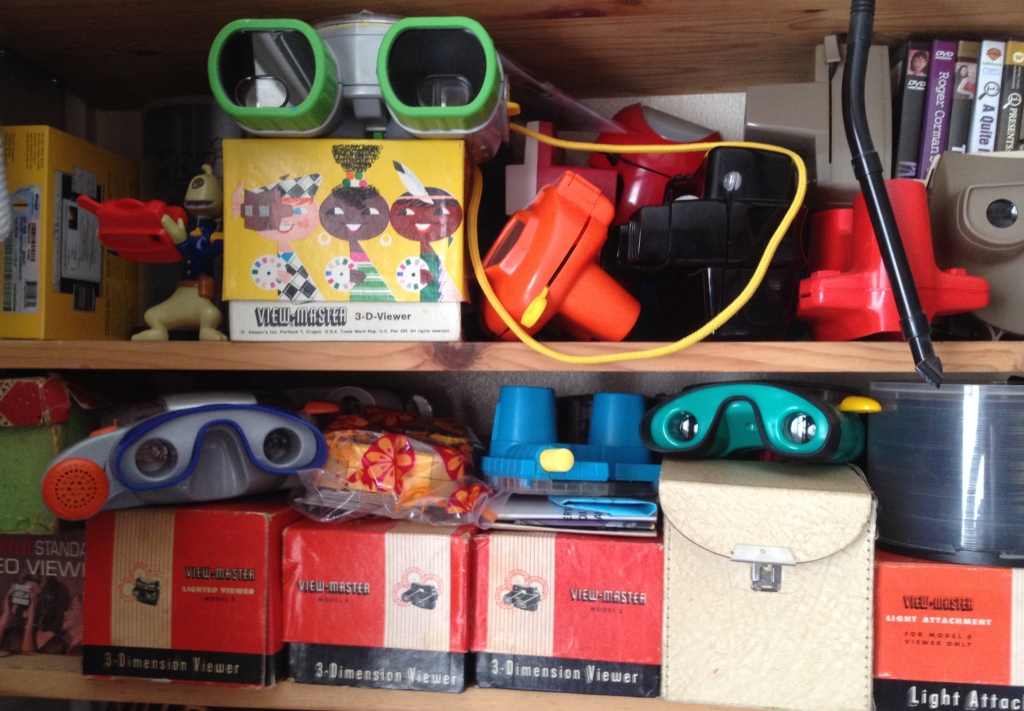
Viewmasters.
Words cannot quite contain my love for these glorious things.
I got my first Viewmaster in 1970 and I still have it; it was a fawn coloured Model G (1959-1977) with a set of circular ‘reels’ that allowed me to see the Apollo 11 moon landing in glorious 3D technicolour. I cannot begin to describe the thrill I felt at first viewing. Just a year previously, at the age of eight, I’d watched the actual moon landing, live on television, in fuzzy shades of grey and it was the most exciting thing that had ever happened to me. Even now, at the starting-to-creak age of 52, I still maintain that it was probably one of the most momentous days of my life. Has TV ever broadcast anything quite so extraordinary since? The Viewmaster, and the treat of seeing it all again in 3D deliciousness was a second bite of the pie. I was hooked. I wanted to eat all the pies.
For subsequent birthdays and Christmases, everyone knew what to get me and my collection of reels grew and grew. My more enlightened relatives bought me reels that they knew I’d squee over; Star Trek, Thunderbirds and anything involving dinosaurs. Other, less well-informed rellies bought me geographical reels – the most prolific of Viewmaster subjects – but I didn’t mind. As a pre-pubescent Cornish boy who regarded visiting Plymouth was ‘going abroad’, it was quite mind-blowing to see the Grand Canyon and the Swiss Alps in three dimensions.
As my teenage years approached, other distractions pulled me away from the Viewmaster: school, music, girls…
Oh, incidentally, you’d have thought that the Viewmaster would have been the perfect medium for porn wouldn’t you? All those sticky-out bits in 3D! But there was none and, as far as I’m aware, there still isn’t. Erm… not that I’ve looked too hard. Erm. I assume that the technical difficulties involved in getting the 3D images processed and fitted into the reels were beyond the means of your average Ron Sleazy Enterprises. Instead we found ‘bush porn’ in the hedgerows and woods. Who did leave that there for us?
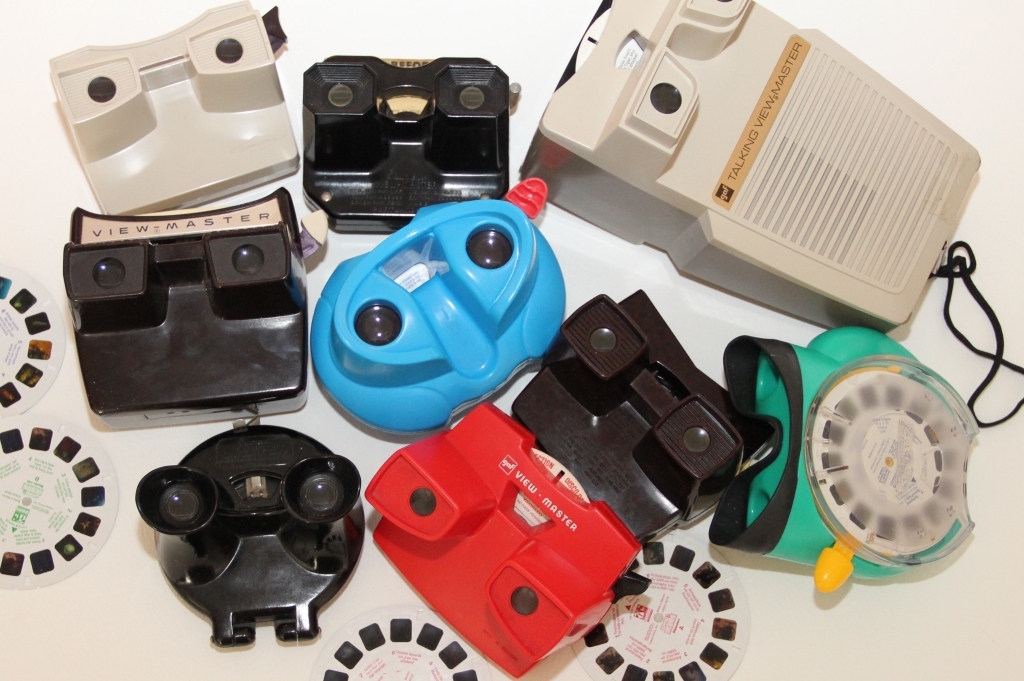
Anyway, my Model G and my collection of reels went into the attic and were almost forgotten about. Time passed and I moved to London and started work. I met a lady. We got married. We had kids. We bought a house. And then, when it was approaching my daughter’s 5th birthday, I was rummaging around in Toys R Us when I happened upon a Viewmaster. And what amazed me about it was that it looked just like my old machine, albeit slightly curvier and chunkier and a bright red in colour. I bought it immediately (with some Teenage Mutant Ninja Turtles reels as I recall). And she loved it! She loved it just as much as I’d loved mine. It inspired me to dig my old 70s machine out of the attic and I discovered with glee that my reels fitted her spanking new Model L just as her reels fitted my Model G. That’s one of the brilliant things about the Viewmaster; the reels have never changed. You can watch a 1952 reel of Queen Elizabeth’s coronation on a brand new 2014 Model O and you can watch a 2014 Ben 10 reel on a 1938 Benite plastic clamshell Model A. I can’t think of a single other medium that has remained completely unchanged while the machines used to view it have continued to evolve.
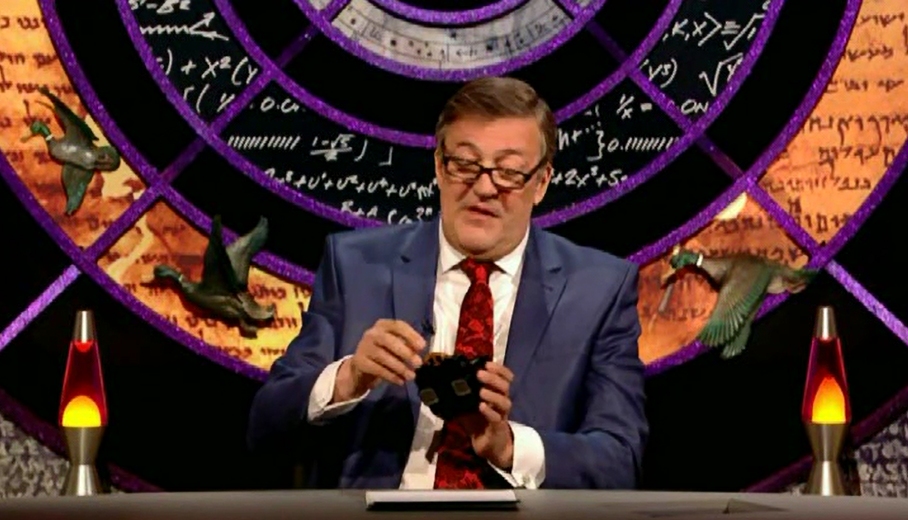
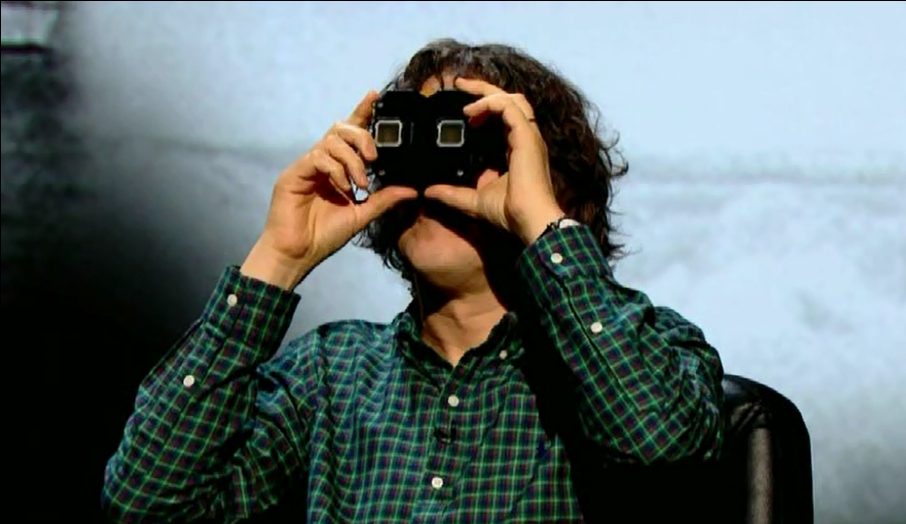
Anyway, to cut a long story short, I now have all the pies. I have a pretty complete collection of Viewmasters; a representative machine of (almost) every model ever produced and thousands of reels. And I absolutely love them. I even got to share my enthusiasm with Stephen Fry, Alan Davies and some QI guests recently when, for the ‘Kitsch’ show, I let them borrow some of my early Bakelite model Cs and Ds to demonstrate that the US military once used them to train gunners in aircraft recognition. Oh yes, Viewmasters aren’t just for kids you know. Believe me, the panellists were all stupidly excited to play with them and were amazed by the wartime reels (also from my collection).
The Viewmaster is/was the best toy I’ve ever had (Lego a close second, mind). You can read about historical events in books and watch documentaries on the TV, but seeing Berlin after the Blitz in high definition 3D really takes you there. Nothing beats seeing London in the 1950s in glorious stereoscopic colour. Nothing beats seeing terrible, inaccurate depictions of dinosaurs from the 1950s. The Viewmaster is history and travel and science and all your favourite TV shows and films presented in a completely unique way.
3D is much-maligned and horribly ubiquitous these days. But it wasn’t always that way. There was a time when it was magical. It certainly was to one nine year old Cornish lad. And, for him at least, it still is.
An interesting week that began with Monday's QI production meeting being filmed by The South Bank Show. They're doing a special all about our boss - the estimable Mr John Lloyd CBE - and his extraordinary career in TV. And, let's be honest, it's well-deserved. He's given us The News Quiz, Not The Nine O'clock News, Spitting Image, The Museum of Curiosity, Have I Got News For You, QI, Blackadder and had a hand in Mr Bean and several other well-known shows. He also co-wrote two episodes of The Hitchhiker's Guide To The Galaxy and The Meaning Of Liff with Douglas Adams. The man's a genius and deserves every accolade lobbed at him.
Tuesday was a working at home day, hunkering down on finding great material for the new series of QI and Wednesday was much the same. Thursday saw me having a couple of quite exciting meetings, one about my possible involvement in working for another popular TV series and one with a publisher about a new book. Then, in the evening, it was off to the famous Foyles bookshop in Charing Cross Road for the Transmission Prize award ceremony.
I was one of the judges this year - no mean feat when every candidate was an amazing person - and my role at the awards was to do a 15 minute presentation explaining who the eight finalists were, what their big idea was, and why we'd selected them for our shortlist. The prize was awarded this year to Dr David Nutt, a brave and brilliant chemist who is challenging politicians over their attitudes to classifications of drugs. As he points out, some of the most damaging drugs are perfectly legal and there are things that can be done to reduce their negative effects on society ... but there is a lack of political will to do so. Meanwhile, other drugs remain illegal making research into their possible uses in medicine fraught with difficulty and bound up with red tape.The Transmission Prize is all about taking big ideas and communicating them effectively and, in his books, interviews, talks, blogs and other media, David speaks with passion, authority and clarity. He was a worthy winner, but picking him out of such a brilliant shortlist was really difficult.
Okay, I admit it. I did enjoy a little ripple of thrills in seeing my name in Foyles' window. It may not have been any of my books on display, but I was judging the winner from the books that were on display ... so that's nearly as cool, isn't it?
Friday saw me back at work on QI and also taking part in an 'Ask the Author' live Twitter chat organised by my publishers at Unbound. Some of the questions were bizarre to say the least! But my latest book - Constable Colgan's Connectoscope - does contain some pretty weird facts too.
When I got home I was both flattered and amused to see that a student called 'Jack J' from the University of Chester had animated one of my appearances on Radio 4 last year. I appeared on Josie Long's Short Stories, speaking for a minute on the subject of the police playing hide and seek on night duty in the early 80s as a way of learning beats. Here's his excellent effort:
This week was a good week. And now the weekend is approaching and I'll be doing some extra QI work to make up for the hours I lost on Thursday. But, to be honest, it's a joy to do so it doesn't really feel like work. :)
On Monday I went to York as a guest of the University of York's QI Society. They were having their pre-Christmas beano and, as part of the larks and shenanigans, they like to put on a quiz. This year, they asked if I would host it, maybe write a few QI-type questions and also do a Q and A about what it's like to be a QI elf and, indeed, how you get to be one.
I explained that the easiest and most popular route is via the talk forums (fora?) on the QI website. It's a place where you can prove your mettle as a fact finder and fact quibbler amongst hundreds of other would-be elves. Do it often and well enough and you soon rise to the cream of the crop, at which point QI might just say, 'How do you fancy wearing an elf hat?'
It was a fun evening although I have to confess that it was not great for my self-esteem being among so many bright young men and women. And when I realised that they were only 10 years older than my granddaughter but 33 years younger than me, I could feel the grave walls closing in.
Thankfully, I was reinvigorated by a walk around the city on Tuesday morning. It's one of the loveliest cities in England I reckon and it was nice to be back; last time I was here was in 2010.
I was about 2 miles outside the city walls and decided to walk as it was a deliciously brisk morning but bright with the prospect of some Winter sunshine. My walk took me down the Hull Road and past St Lawrence's with its ancient tower and gravestones so old the inscriptions have been eroded by wind and rain. It's weird to think that no one living remembers the people interred here and, even if they did, there's no indication of whose grave is who's.
I soon approached the city walls. If you've never been to York, you may not be aware of just how well the ancient city walls have been preserved. You can pretty much walk around the perimeter of the old city, passing by its several gates as you do so. I was entering by Walmgate, built during the reign (1272 to 1307) of Edward I 'Longshanks'. It's been much built upon ever since and was completely renovated in the 1950s.
I then walked down through Walmgate, passing by beautiful buildings like the 14th century timber-framed Bowes-Murrell House and over the River Foss and past the glorious Merchant Adventurer's Hall (same era), stopping only for a cracking breakfast at the Sitting Pig. So appropriately named. :)
I didn't have much time before my train was due to leave so I bimbled around a few antiquarian bookshops and then set off for the train station, passing by the faded glory of the old White Swan Hotel, the red brick pomp of Barclays Bank on Parliament Street, the sagging Jones and Co and Golden Fleece in Pavement, and then through Higher and Lower Ousegate and over the River Ouse itself.
I then passed out of the old city through Micklegate and arrived at the station and set off home.
My journey was made all the more bearable between York and Grantham by chatting to a lovely octogenarian with the memory of a goldfish who repeatedly told me the same stories for an hour. But she was lovely and the miles flew by.
However, the second half of the journey was spent with a bald Yorkshire businessman in 1980s red braces who went on the attack against 'Southerners' pretty much with his first words to me. I mean, it's good to be proud of your roots but he was just annoying and rude. He spoke with the same patronising and slightly fearful tone you hear from racists and homophobes. I know he isn't representative of the North, which is generally much friendlier and open than the South and I won't have my views overturned by one loud bigoted twat. And anyway, he wasn't quite so talkative after I pointed out that, to the Scots and Geordies he's a 'Southerner'. And when, as many scientists predict, the Earth's poles switch, I'll be the Northerner.
Take that baldy.
A shame I didn't get more time in York. It's a city I know quite well from other visits but I'd like to know it better.
In this episode of The Badger Hole of Ignorance, producers Dan Schreiber and Richard Turner discuss Series 1 of The Museum of Curiosity, recorded in 2006.
Aiding host John Lloyd in this first series was guest curator Bill Bailey.
The guests, and their donations, were as follows:
Show 1: Professor Richard Fortey (Curators of the Natural History Museum and the Giant Hornet of Chang Jiang), Sean Lock (The modern Scarf Knot) and Brian Blessed (The Yeti).
Show 2: Fran Beaumann (A Pineapple), Dr Gary Sheffield (Anderson Shelters) and Ben Elton (Privacy).
Show 3: Arthur Smith (Arthur Cravan), Professor Frank Close (Nothing) and Professor Ronald Hutton (Father Christmas).
Show 4: Victoria Finlay (Pliny the Elder), Kevin Day (The Battle of Waterloo) and Alastair Fothergill (the Hairy Angler Fish).
Show 5: Sir Jonathan Miller (Nottingham Alabasters), Dr Phillip Ball (Phlogiston) and Professor Marcus du Sautoy (The Monster).
Show 6: Dr John Gribbin (The Big Bang when it was the size of a Grapefruit), Alan Davies (Epping Forest) and Martha Reeves (Silence).
So here's the podcast hosted, as always, by the affable Ken Plume:
Yesterday was an interesting day. It began at BBC Radio 4 and my appearance on the Saturday Live magazine show with the Reverend Richard Coles and Anita Anand and guest star Richard Osman of Pointless fame.
Great fun and lovely people. We discussed quizzes, Cornwall, policing and the curious subject of cows having regional accents, among other things. You can listen to the show or download it as a podcast here.
I then mooched around some bookshops and was delighted to see that the Connectoscope has started to appear on the shelves. I don't think I'll ever not be thrilled by seeing one of my books in the shops.
Then it was on to North East London and a video shoot for the new single by Emperor Yes. I've known the lads - multi-instrumentalists Ash Gardner and Hugo Sheppard and Three Trapped Tigers drummer, the mighty Adam Betts - for a few years. Their videos are always innovative and slightly bonkers, usually involving mad costumes, animation and nods to favourite film genres. Here, for example, are their videos for Wasps and Cosmos:
I won't issue any spoilers about the new video other than to say it centres around an apocalyptic party and some curious men in costumes. My role is the mysterious 'Straws Guy'. Intriguing, eh? I'll link to the video when it's released but, in the meantime, here are a few teaser photos from the shoot (apologies for poor quality - phone camera in low light) ...
Under the costumes you might recognise Museum of Curiosity producer Dan Schreiber (frog) and magician Pete Heat (polar bear). You might also, if you're a regular to this blog, spot my Carl Sagan cartoon behind the band:
Welcome to The Badger Hole of Ignorance, the official podcast of The Museum of Curiosity!
Hosted by noted American broadcaster, film producer and owner of Fred Entertainment, the ever-affable Ken Plume, Badger Hole (as I like to call it, probably) will take you behind the scenes at the Museum. You'll hear how the show gets made, who makes the show and learn a little more about the people who make up the show's steering committee i.e. the guests and what they donate.
Here's Podcast Zero, a kind of prequel podcast in which producers Dan Schreiber and Richard Turner explain the history of the show and how, against all the odds, it was born in 2009.
I was very sad to hear of the death of legendary broadcaster Sir David Frost yesterday. I had the great good fortune to work with him a couple of months ago when he appeared as one of our guests on the new series of The Museum of Curiosity. He was a delight to have on the show and, although he did look a little frail, he was sharp and witty and generous with his time and laughter. He had a way of making you feel that you were the most important person he'd spoken to that day; I guess that was the secret of his long success.
(LtoR - Sir David, Dr Paul Sinha, Dr Maggie Aderin-Pocock, John Lloyd, (front) Humphrey Ker. Photo copyright Stevyn Colgan)
A sad loss.
The show will go out on BBC Radio 4 sometime in October.
Last night we recorded the final episode of Series Six of The Museum of Curiosity with Sir Howard Stringer (former head of Sony and NBC and possibly the only Oxford graduate drafted to fight in Vietnam for the US Army), Richard Ingrams (co-creator of Private Eye and The Oldie magazines), and Jane Bussmann (Comedy writer for Brass Eye, The Fast Show, Smack the Pony, South Park and the woman who exposed African terrorist Joseph Kony's activities to the West). What an endlessly fascinating group of people they were.
Photo: Stevyn Colgan
I'm very proud to work on such an amazing show. It's just a shame that more people don't know about it. In this age of myriad hi-def 3D TV channels, the radio is seen as very much the poor relation. But radio is where all the interesting stuff is. I doubt that we'd ever be able to sell the idea of the Museum to TV execs and yet it fulfils everything that Lord Reith insisted upon when the BBC was created: It educates, informs and entertains, absolutely to the letter. How many other shows can say the same?
We recorded the penultimate Museum of Curiosity at the BBC Radio Theatre last night. Our guests this time were cybernetics and robotics expert Professor Kevin Warwick, renowned tequila expert and ex-Kenny Everett sidekick Cleo Rocos and Red Dwarf and Scrapheap Challenge star Robert Llewellyn.
We recorded Episode 4 of Series 6 of The Museum of Curiosity last night at the Shaw Theatre in Euston. It's the first time we've used it for this show and it's a lovely venue. On the panel we had astrophysicist and satellite designer Dr Maggie Aderin-Pocock, ex-GP, stand-up comedian, champion quizzer and star of The Chase Dr Paul Sinha and the legend that is Sir David Frost.
Another warm, witty, intelligent and occasionally hilarious episode in the can.
Yesterday I did a gig at the Cornbury Festival in Oxfordshire. It's the 10th Cornbury this year and the biggest and best yet with over 70,000 people through the gates. Topping the music bill this year we had Keane, Squeeze, The Proclaimers, Van Morrison, Echo and the Bunnymen, Imelda May, Bellowhead and Seth Lakeman among others. Also on the bill, for what will probably be his last Cornbury was the amazing, brave and extraordinary Wilko Johnson.
In addition to doing a talk promoting my new book (and signing a few afterwards) I was also on duty for QI as, this year, QI and my publishers, Unbound, were sharing a tent.
So, if you visited us, you could do all kinds of things: you could do some experiments on the Knick-Knacks table, 'Ask an Elf' any impossible question you like, take part in the QI Quiz and/or listen to readings from people like Hugh Cornwell of The Stranglers, Julie Burchill, Salena Godden, George Chopping, Robert Llewellyn, Katy Brand and more. We also boasted a brilliant comedy set from Alan Davies, making a rare live stand-up appearance.
A wonderful day out made better by the hordes of lovely people popping in and out of the tent all day. It ended with beers, great music and hot air balloons. Fabulous.